
Back
December 11, 2025 | Timothy Gotcher
Ceramic Coating Near Me: Recommended Care Tips for Ceramic-Coated Cars in Lewisville
You have just made a significant investment in the longevity and aesthetic of your vehicle. The gloss is undeniable, the surface is slick to the touch, and the way water beads up and rolls off the hood is nothing short of satisfying. However, now that you have picked up your vehicle: how do you keep it looking this good for the long haul?
Many car owners in Lewisville make the mistake of assuming a ceramic coating is a "set it and forget it" solution. While it provides incredible protection against UV rays, chemical stains, and minor environmental contaminants, it is not bulletproof. It is a high-performance sacrificial layer that requires specific care to maintain its hydrophobic properties and showroom shine.
If you recently searched for ceramic coating near me and chose Eco Pal Mobile Detail to protect your ride, this guide is designed for you. We have compiled a comprehensive maintenance handbook to help you navigate Lewisville’s unique driving conditions—from the scorching Texas sun to our mineral-rich hard water—ensuring your investment pays off for years to come.
The Philosophy of the Wash: Changing Your Routine
The way you wash your car must fundamentally change the moment you apply a ceramic coating. The goal is no longer just getting the dirt off; it is about removing contaminants without inflicting the swirl marks that can dull your coating’s finish over time.
The most critical period is the immediate aftermath of the application. Patience is essential here. After your coating is applied, it requires time to fully cure and bond to the paint’s clear coat. We strongly advise against washing your vehicle for the first seven days after application. During this curing window, the coating is still hardening, and introducing water, high-pressure soap, or agitation can disrupt the chemical bonding process, leading to premature failure. If you happen to get bird droppings on the paint during this week, gently blot them off with a wet microfiber towel, but avoid scrubbing or full washes until the week is up.
Once that first week has passed, your washing technique becomes the primary line of defense. The industry standard you should adopt is known as the Two-Bucket Method. Most "spiderweb" scratches you see on vehicles are caused by the washing process itself—specifically, by rubbing dirt back into the paint with a dirty mitt. By using one bucket for clear rinse water and a separate bucket for your soap, you ensure that you are always rinsing your mitt clean before dipping it back into the suds. This simple separation prevents grit from being dragged across your pristine coating.
Furthermore, the chemistry of your soap matters just as much as your technique. High-alkaline detergents, like common dish soap, act as heavy degreasers. While they won't strip a ceramic coating immediately, repeated use can break down the coating's surface tension, killing that beautiful water-beading effect. You should exclusively use a shampoo labeled as "pH-neutral" or "ceramic safe." These formulas are designed to lift dirt gently without attacking the coating’s structure.
The Dangers of Convenience: What to Avoid
If you want your ceramic coating to last its full three-to-five-year lifespan, knowing what to avoid is just as important as knowing what to do. The most common enemy of a ceramic coating is the automatic car wash.
While the convenience of a drive-thru wash is tempting, it represents the single biggest threat to your paint's finish. Even facilities that claim to be "soft touch" utilize giant spinning brushes that slap your car with considerable force. These brushes inevitably hold dirt, grit, and grease from the hundreds of vehicles that went through before you. The result is millions of micro-scratches that dull your coating’s gloss and reduce its lifespan. Even "touchless" automatic washes pose a risk, as they often rely on extremely harsh, acidic chemicals to compensate for the lack of scrubbing, which can degrade your coating over time. Hand washing is, without exception, the safest approach.
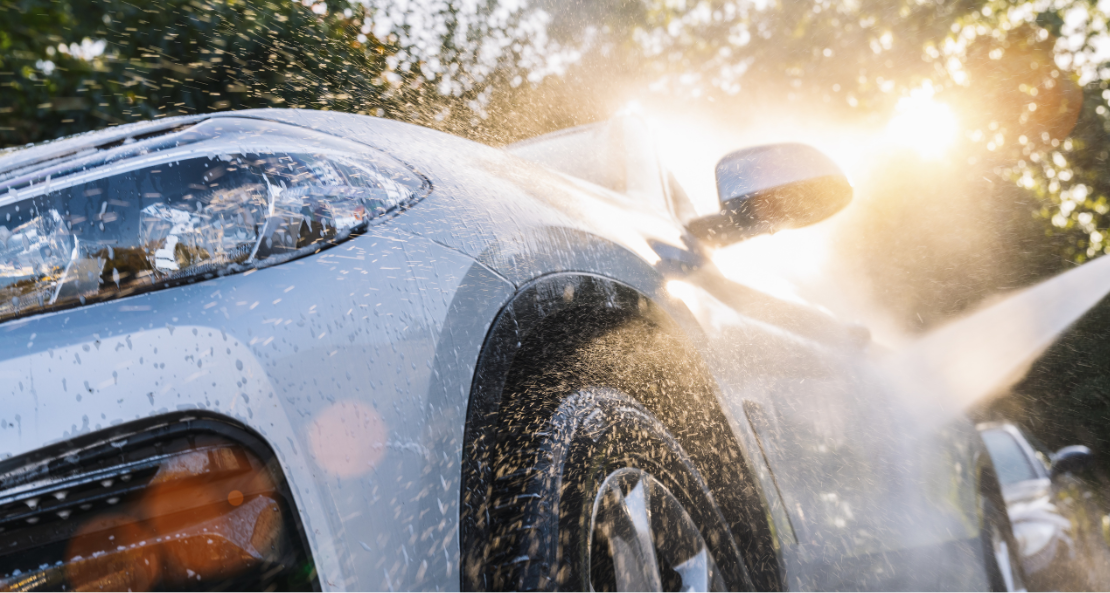
Additionally, you must be mindful of the environment in which you wash. In Lewisville, the sun can be unforgiving. Washing your car at high noon when the paint is hot is a recipe for disaster. Water evaporates instantly on hot panels, leaving behind soap scum and mineral deposits that bake into the coating. We recommend washing your car early in the morning or late in the evening. A good rule of thumb is to touch the hood of your car; if it feels hot to your hand, it is too hot to wash.
It is also worth noting that traditional wax is obsolete for your vehicle. Many owners instinctively want to wax their car for extra shine, but traditional wax sits on top of the surface. If you apply wax over ceramic, you are essentially masking the superior, high-gloss ceramic layer with a softer, inferior wax layer. This hides the coating’s hydrophobic properties, meaning dirt will stick to your car more easily, effectively defeating the purpose of the coating.
Navigating Lewisville’s Road Conditions
Driving in North Texas presents a specific set of challenges for vehicle owners. From the construction dust on I-35 to our local water quality, the environment is constantly trying to attack your clear coat.
One of the most persistent issues in Lewisville and the wider DFW area is hard water. Our tap water is full of dissolved minerals like calcium and magnesium. If you wash your car with a garden hose and let it air dry, those minerals are left behind as the water evaporates. These create water spots—tough, white rings that can actually etch into the coating if left for too long. To combat this, you must never let tap water dry on the car naturally. Drying the vehicle immediately after rinsing is mandatory. When you utilize a professional service like Eco Pal Mobile Detail, we often use filtration systems to minimize mineral content during the wash, significantly reducing this risk.
Beyond water, you must also contend with biological contaminants. Bug splatter and bird droppings are highly acidic. While ceramic coatings are chemically resistant, they are not impervious to prolonged exposure. If you hit a swarm of bugs on the Sam Rayburn Tollway or find bird droppings on your hood, it is vital to remove them as soon as possible. The longer acidic substances sit on the coating in the Texas heat, the more likely they are to cause etching.
The Art of Drying and Maintenance
Most paint marring happens during the drying phase. Your coating makes the surface slick, but you still need to be gentle. The safest method is to touch the paint as little as possible. Using a dedicated car dryer or even a clean electric leaf blower is fantastic for ceramic-coated cars. Because the coating is hydrophobic, the water is already trying to bead up and roll off. A blast of air will chase the water out of cracks, mirrors, and grilles without you ever putting a towel on the paint.
If you prefer towel drying, you must discard old bathroom towels and chamois leathers. Instead, use a high-GSM (plush) microfiber towel. To ensure safety, spray a "drying aid" or a light mist of detail spray on the wet car before wiping. This adds lubrication, allowing your towel to glide over the surface without friction.
Finally, to maximize the longevity of your investment, you need to feed the coating occasionally. Think of this as a moisturizer for your paint. Every few months, we recommend applying an SiO2 (silicon dioxide) ceramic boost spray after a wash. This adds a sacrificial layer of protection on top of your coating, taking the brunt of the elements and preserving the base coating underneath.
Even with perfect care, contaminants like iron particles from brake dust and road tar can slowly build up on the surface over the course of a year, making the paint feel rough. This is why we recommend scheduling a professional decontamination wash with Eco Pal Mobile Detail annually. We use specialized chemical removers to dissolve iron and tar without hurting the coating, restoring that smooth-as-glass feeling.
Protecting Your Investment
A ceramic coating is ultimately a partnership between the detailer and the vehicle owner. At Eco Pal Mobile Detail, we do the hard work of paint correction and application to give you a flawless foundation. Your job is to maintain that foundation with gentle washing and common sense.
By adhering to these guidelines—avoiding the automatic car wash, drying your car properly to avoid Lewisville’s hard water spots, and using the right pH-neutral products—your car will turn heads on the highway for years, not just months.
If you are ready to protect your vehicle or need a maintenance wash to restore your coating's performance, stop searching for ceramic coating near me and trust the local experts who know exactly what your car needs. We are ready to help you keep that shine lasting.